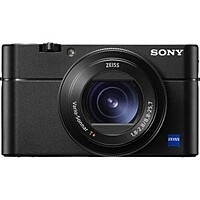
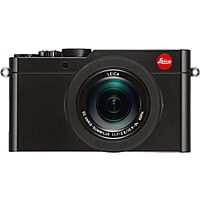
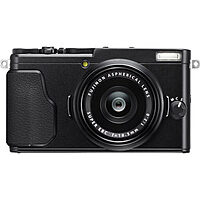
Fujifilm X100T with Sony Cyber-shot DSC-RX100 III Overview
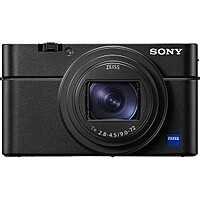
Let's compare Sony Cyber-shot DSC-RX100 III with FujiFilm X100T.
These models are included in the Large Sensor Compact cameras.
Both of these models were released in 2014. This means that differences will go a long way. Let's take a closer look.
The sensor resolution of Cyber-shot DSC-RX100 III is greater than that of X100T. However, the difference of 4 MP is not very significant.
The more megapixels the camera has, the more detailed and clear the picture will be. The number of megapixels will also affect the maximum size of the photos, which then can be printed without loss of quality.
At the second camera (X100T), the minimum ISO value is lower, which gives more opportunities for shooting in daylight.
A larger maximum ISO allows you to take good pictures in the dark.
At Sony RX100 III, the maximum ISO is greater by 6400.
Cyber-shot DSC-RX100 III has image stabilization(Optical), X100T doesn’t, it is a big minus.
Both cameras feature a 3-inch tilting screen.
Cyber-shot DSC-RX100 III has electronic viewfinder, and the X100T doesn’t have.
Viewfinder X100T has a higher resolution of 2360k dots, Cyber-shot DSC-RX100 III has a resolution of 1440k dots.
Burst mode, also called continuous shooting mode, sports mode or continuous high speed mode, is a shooting mode in still cameras. Sony Cyber-shot DSC-RX100 III has 6.0 fps continuous shooting.
Sony Cyber-shot DSC-RX100 III has 6.0 fps continuous shooting.
| General |
Cyber-shot DSC-RX100 III |
X100T |
| Brand |
Sony
|
FujiFilm
|
| Model |
Cyber-shot DSC-RX100 III |
X100T |
| Announced |
May, 2014 |
September, 2014 |
| Body Type |
Large sensor compact |
Large sensor compact |
| Lens |
| Lens Mount |
fixed lens |
fixed lens |
| Manual Focus |
|
|
| Focal Lens Multiplier |
|
|
| Number of Lenses |
0 |
0 |
| Macro Focus Range |
5 |
10 |
| Screen |
| Screen Size |
3" |
3" |
| Screen Type |
Tilting |
Fixed |
| Screen Resolution |
1229k pixels |
1040k pixels |
| Touch Screen |
|
|
| Live View |
|
|
| Viewfinder |
| Viewfinder |
Electronic |
Electronic and Optical (tunnel) |
| Viewfinder Resolution |
1440 |
| Viewfinder Coverage |
100% |
92% |
| Viewfinder Magnification |
0.59 |
0.5 |
| Autofocus |
| AF Touch |
|
|
| AF Continuous |
|
|
| AF Single |
|
|
| AF Tracking |
|
|
| AF Selective |
|
|
| AF Center |
|
|
| AF Multi Area |
|
|
| AF Live View |
|
|
| AF Face Detection |
|
|
| AF Contrast Detection |
|
|
| AF Phase Detection |
|
|
| Number of Focus Points |
25 |
49 |
| Number of Cross Focus Points |
0 |
0 |
| Photography Features |
| RAW Support |
|
|
| Min Shutter Speed |
1/30 sec |
1/30 sec |
| Max Shutter Speed |
1/2000 sec |
1/4000 sec |
| Continuous Shooting |
10.0 fps |
6.0 fps |
| Shutter Priority |
|
|
| Aperture Priority |
|
|
| Manual Exposure Mode |
|
|
| Exposure Compensation |
|
|
| Custom White Balance |
|
|
| Image Stabilization |
|
|
| Built-in Flash |
|
|
| Flash Range |
no built-in flash |
9.00 |
| Flash Modes |
n/a |
Auto, forced, suppressed, slow synchro, commander |
| External Flash |
|
|
| AE Bracketing |
|
|
| AE Bracketing Range |
±3 EV |
±3 EV |
| WB Bracketing |
|
|
| Sensor |
| Sensor Size |
1 |
APS-C |
| Sensor Type |
BSI-CMOS |
CMOS X-TRANS II |
| Sensor Dimensions |
13.2 x 8.8 mm |
23.6 x 15.6 mm |
| Sensor Area |
116.2 mm² |
368.2 mm² |
| Sensor Resolution |
20 MP |
16 MP |
| Max Image Resolution |
5472 x 3648 |
4896 x 3264 |
| Max Native ISO |
12800 |
6400 |
| Min Native ISO |
125 |
200 |
| Max Boosted ISO |
0 |
51200 |
| Min Boosted ISO |
0 |
100 |
| Video Features |
| 4K |
|
|
| Max Video Resolution |
1920 x 1080 |
1920 x 1080 |
| Video Formats |
MPEG-4, AVCHD, XAVC S |
H.264 |
| Timelapse Recording |
|
|
| Microphone Port |
|
|
| Headphone Port |
|
|
| Exposure Modes |
| Multi-Segment |
|
|
| Average |
|
|
| Spot |
|
|
| Partial |
|
|
| AF-Area |
|
|
| Center Weighted |
|
|
| Connectivity |
| GPS |
None |
None |
| Wireless Connectivity |
Built-In |
Built-In |
| Bluetooth |
|
|
| HDMI |
|
|
| USB |
USB 2.0 (480 Mbit/sec) |
USB 2.0 (480 Mbit/sec) |
| Battery |
| Battery Life |
320 shots |
330 shots |
| Battery Type |
Battery Pack |
Battery Pack |
| Battery Model |
NP-BX1 |
NP-95 |
| Physical |
| Weight |
290 g |
440 g |
| Physical Dimensions |
102 x 58 x 41 mm |
127 x 74 x 52 mm |
| Environmental Sealing |
|
|
| Water Proof |
|
|
| Dust Proof |
|
|
| Shock Proof |
|
|
| Crush Proof |
|
|
| Freeze Proof |
|
|
| Shock Proof |
|
|
| Storage |
| Storage Type |
SD/ SDHC/SDXC, Memory Stick Pro Duo/ Pro-HG Duo |
SD/SDHC/SDXC |
| Storage Slots |
1 |
1 |
| Other Features |
| Self Timer |
|
|
| Selfie Friendly |
|
|
Interesting Large Sensor Compact